Product Overview
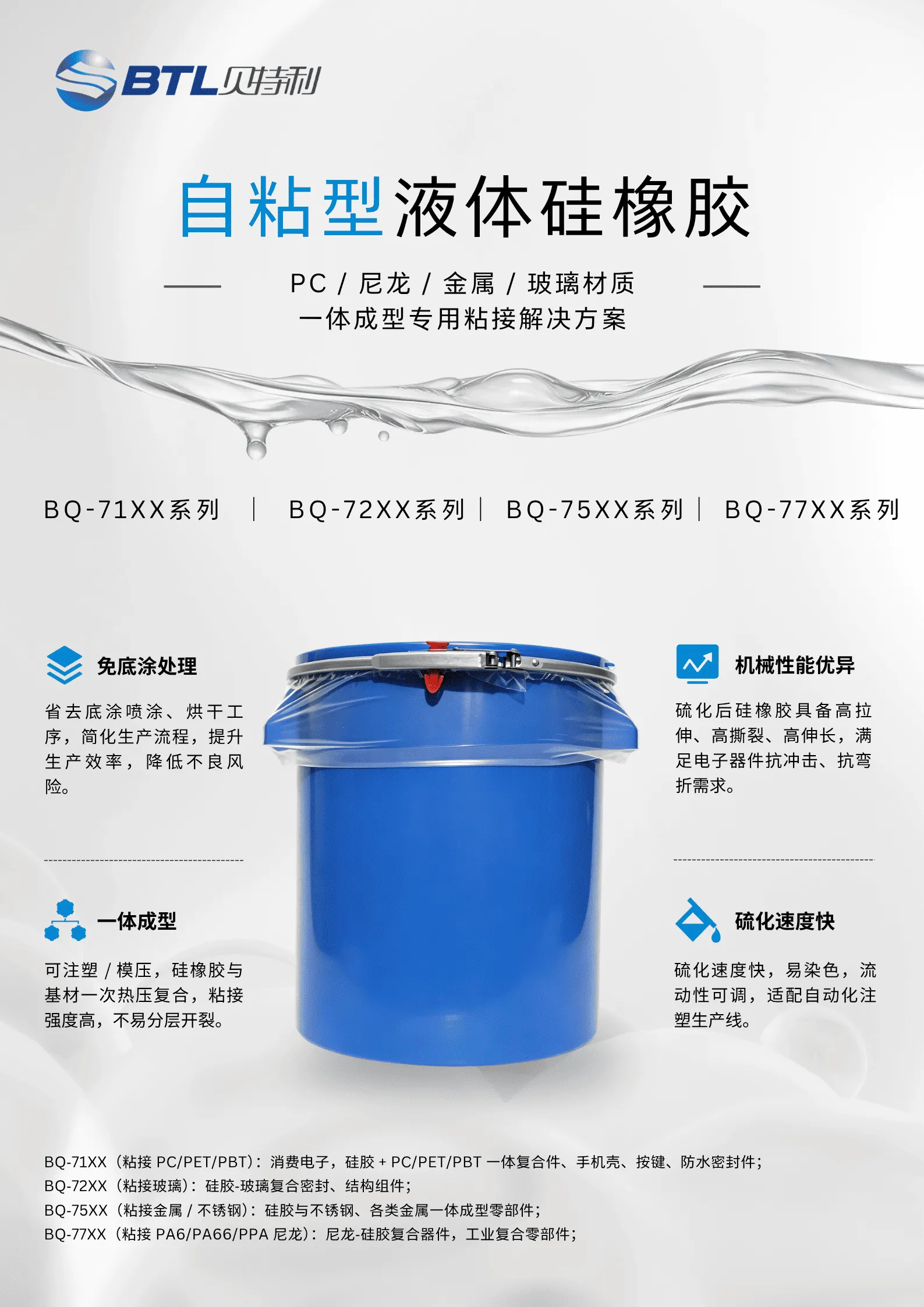
Betely Self-Adhesive Liquid Silicone Rubber is a two-component, translucent, addition-cure self-adhesive LSR available in two main series:
BQ-71XX Series: Specially Designed for Bonding to PC (Polycarbonate)
No primer is required. The silicone can be directly injection molded or compression molded together with PC substrates. It offers inherent release properties from metal molds, easy colorability, fast curing, and excellent mechanical strength. This series is specifically designed for silicone-PC composite components used in 3C consumer electronics.
BQ-77XX Series: Designed for Bonding to Nylon and Metal Substrates
This series enables strong primerless bonding between silicone rubber and nylon or metal substrates. The mold must be treated with a PTFE anti-stick coating. It is suitable for manufacturing a wide range of high-strength silicone composite components.
Both series support automatic LSR injection molding and manual compression molding, helping replace conventional primer-based bonding processes, reduce production steps, and improve manufacturing yield.
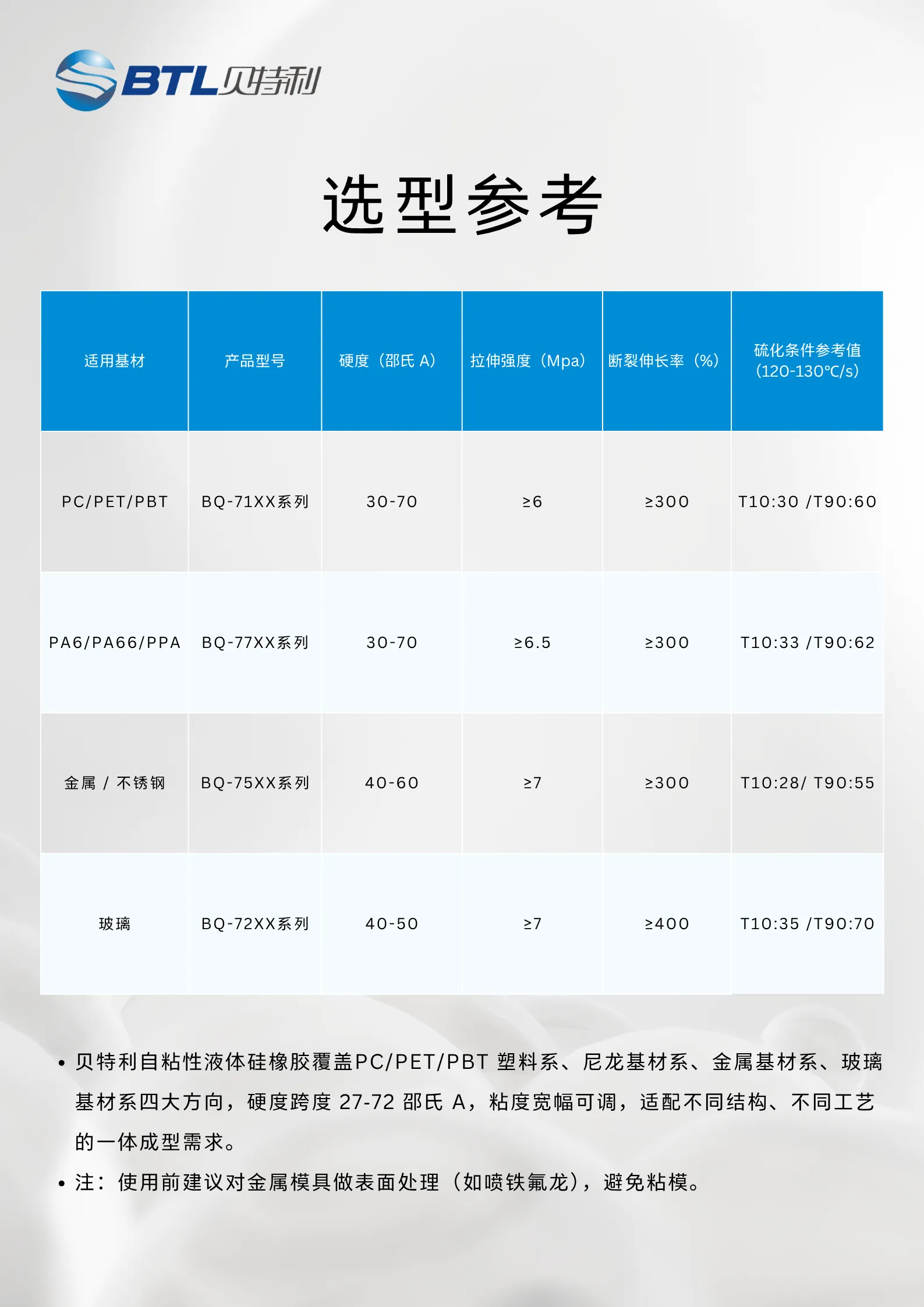
Model Selection Overview
▶ PC Bonding Series
BQ-71XX Series
Curing condition: 120°C / 150 s @ 2 mm
Metal molds provide inherent release properties, with no PTFE treatment required.
| Model | Shore A Hardness | Part A Viscosity, Pa·s | Part B Viscosity, Pa·s | Elongation, % | Tensile Strength, MPa | Tear Strength, kN/m |
| BQ-7133AB | 27-33 | 400-700 | 600-1000 | ≥400 | ≥6.0 | ≥18 |
| BQ-7143AB | 37-43 | 800-1500 | 800-1500 | ≥400 | ≥6.0 | ≥20 |
| BQ-7150AB | 47-53 | 1500-2500 | 2500-4500 | ≥300 | ≥7.0 | ≥25 |
| BQ-7160AB | 59-63 | 1200-2000 | 2000-3600 | ≥300 | ≥7.0 | ≥25 |
▶ Nylon & Metal Bonding Series
BQ-77XX Series
Curing condition: 140°C / 120 s @ 2 mm
The mold must be PTFE-treated. Nylon substrates must be dried at 150°C for 30 minutes before molding to remove moisture.
| Model | Shore A Hardness | Part A Viscosity, Pa·s | Part B Viscosity, Pa·s | Elongation, % | Tensile Strength, MPa | Tear Strength, kN/m |
| BQ-7730AB | 27-33 | 900-1500 | 3000-3500 | ≥400 | ≥6 | ≥18 |
| BQ-7740AB | 37-43 | 1000-2000 | 4000-6000 | ≥400 | ≥6 | ≥20 |
| BQ-7750AB | 47-53 | 700-1300 | 4000-6000 | ≥300 | ≥7 | ≥25 |
| BQ-7760AB | 57-63 | 5000-8000 | 10000-15000 | ≥300 | ≥7 | ≥25 |
| BQ-7770AB | 66-72 | 1500-3500 | 7000-11000 | ≥300 | ≥7 | ≥25 |
Betely Self-bonding LSR covers four major application categories: PC/PET/PBT plastic substrates, nylon substrates, metal substrates, and glass substrates. With a Shore A hardness range of 27-72 and a wide adjustable viscosity range, it can accommodate integrated molding requirements for different component structures and processing methods.
Note: Before use, it is recommended to apply surface treatment to metal molds, such as a PTFE (Teflon) coating, to prevent the silicone from sticking to the mold.
Key Advantages
Primerless Integrated Molding
Bonds directly to PC, nylon, and metal substrates without primer application and drying, helping reduce labor requirements and shorten production cycles.
Excellent Mechanical Properties
High tensile strength, high tear resistance, and high elongation help meet the bending, deformation, and tear-resistance requirements of components with complex structures.
Flexible Molding Processes
Suitable for both automated LSR injection molding and manual mixing/compression molding, making it adaptable to both high-volume and small-batch production.
Easy Coloring
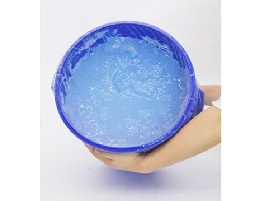
The translucent base material can be easily colored according to application requirements, offering greater flexibility in product appearance.
Inherent Mold Release for the BQ-71XX Series
When producing PC-silicone composite parts, additional PTFE treatment of metal molds is not required, helping simplify mold preparation and maintenance.
Applications
BQ-71XX Series (PC Bonding):
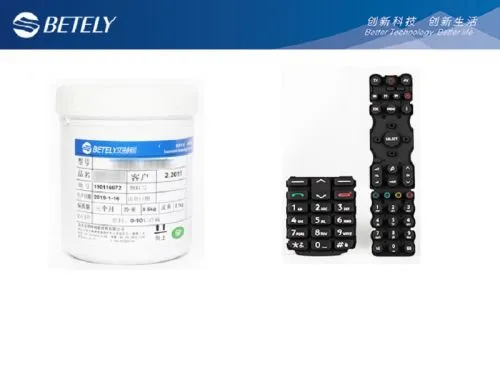
Suitable for mobile phones and consumer electronics, including silicone + PC integrated molded components, phone cases, waterproof sealing components, buttons, keys, and other 3C composite products.
Processing Guidelines
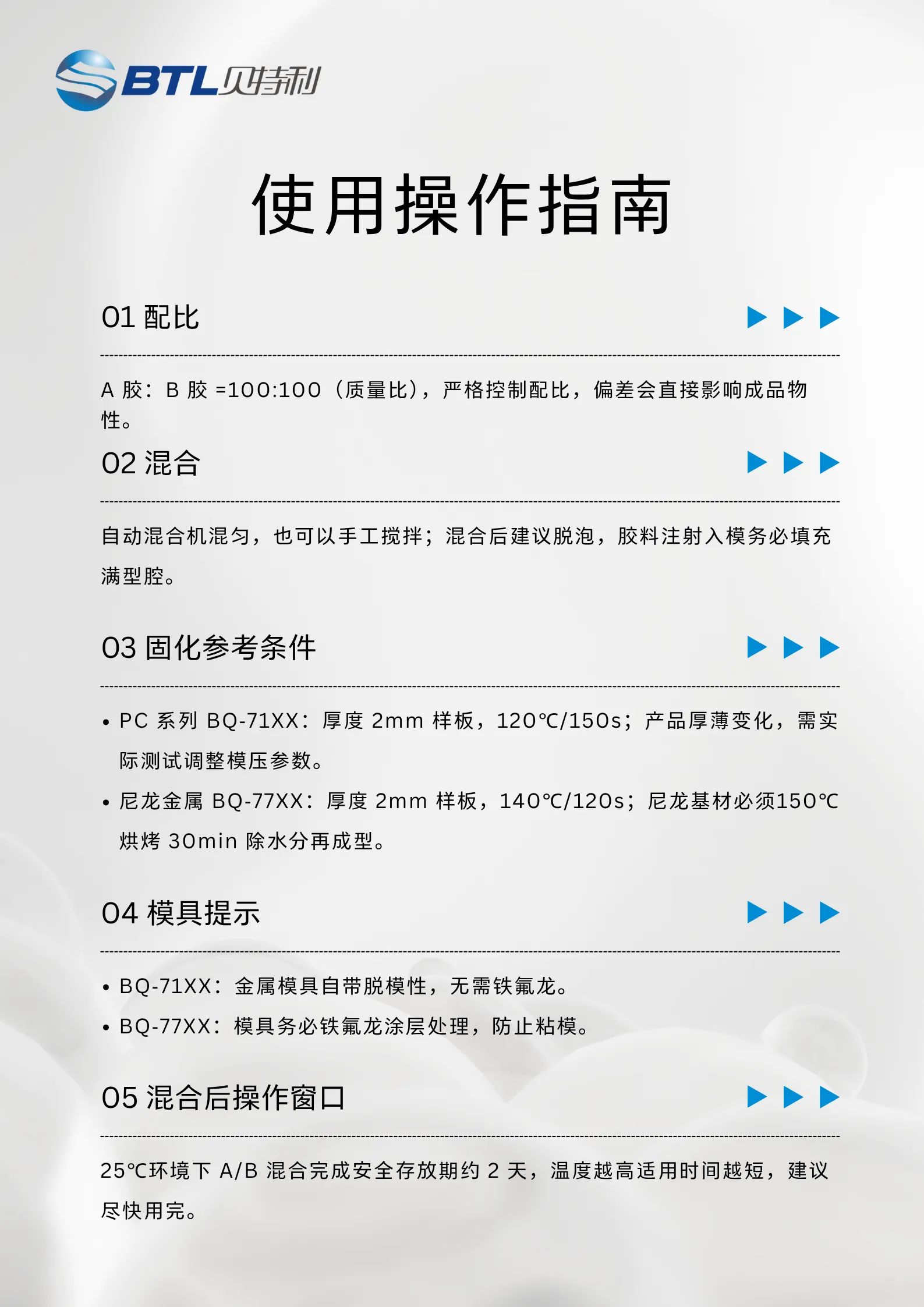
Mixing Ratio
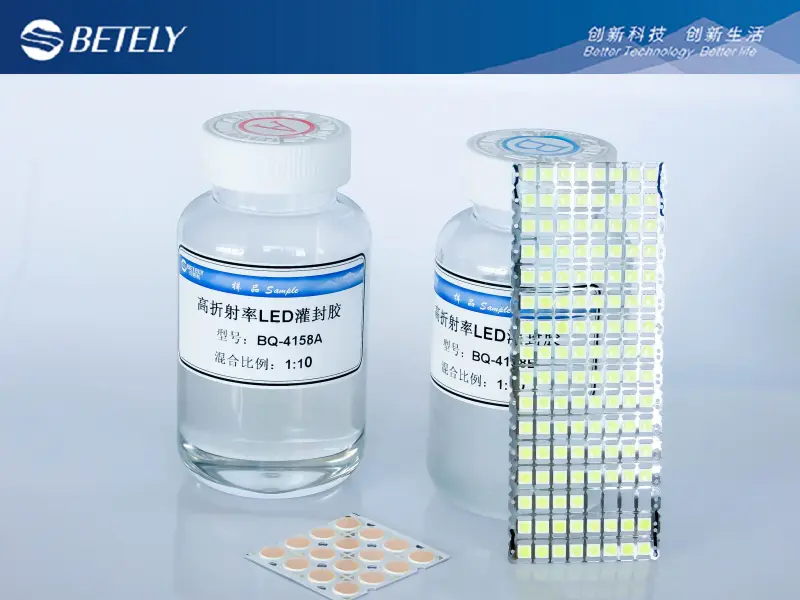
Part A : Part B = 100 : 100 by weight. The mixing ratio must be strictly controlled, as deviations may directly affect the physical properties of the finished product.
Mixing
The two components can be mixed using an automatic mixing system or manually. Degassing is recommended after mixing. During injection or molding, ensure that the compound completely fills the mold cavity.
Reference Curing Conditions
PC Bonding Series BQ-71XX: For a 2 mm thick test specimen, the recommended curing condition is 120°C / 150 s. Actual molding parameters should be adjusted through testing according to the thickness and geometry of the finished product.
Nylon / Metal Bonding Series BQ-77XX: For a 2 mm thick test specimen, the recommended curing condition is 140°C / 120 s. Nylon substrates must be dried at 150°C for 30 minutes to remove moisture before molding.
Mold Requirements
BQ-71XX: Metal molds provide inherent release properties, so no PTFE treatment is required.
BQ-77XX: The mold must be treated with a PTFE anti-stick coating to prevent sticking to the mold.
Working Time After Mixing
At an ambient temperature of 25°C, the safe working/storage time after Parts A and B are mixed is approximately 2 days. Higher temperatures will shorten the usable working time, so the mixed material should be used as soon as possible.
Important Precautions
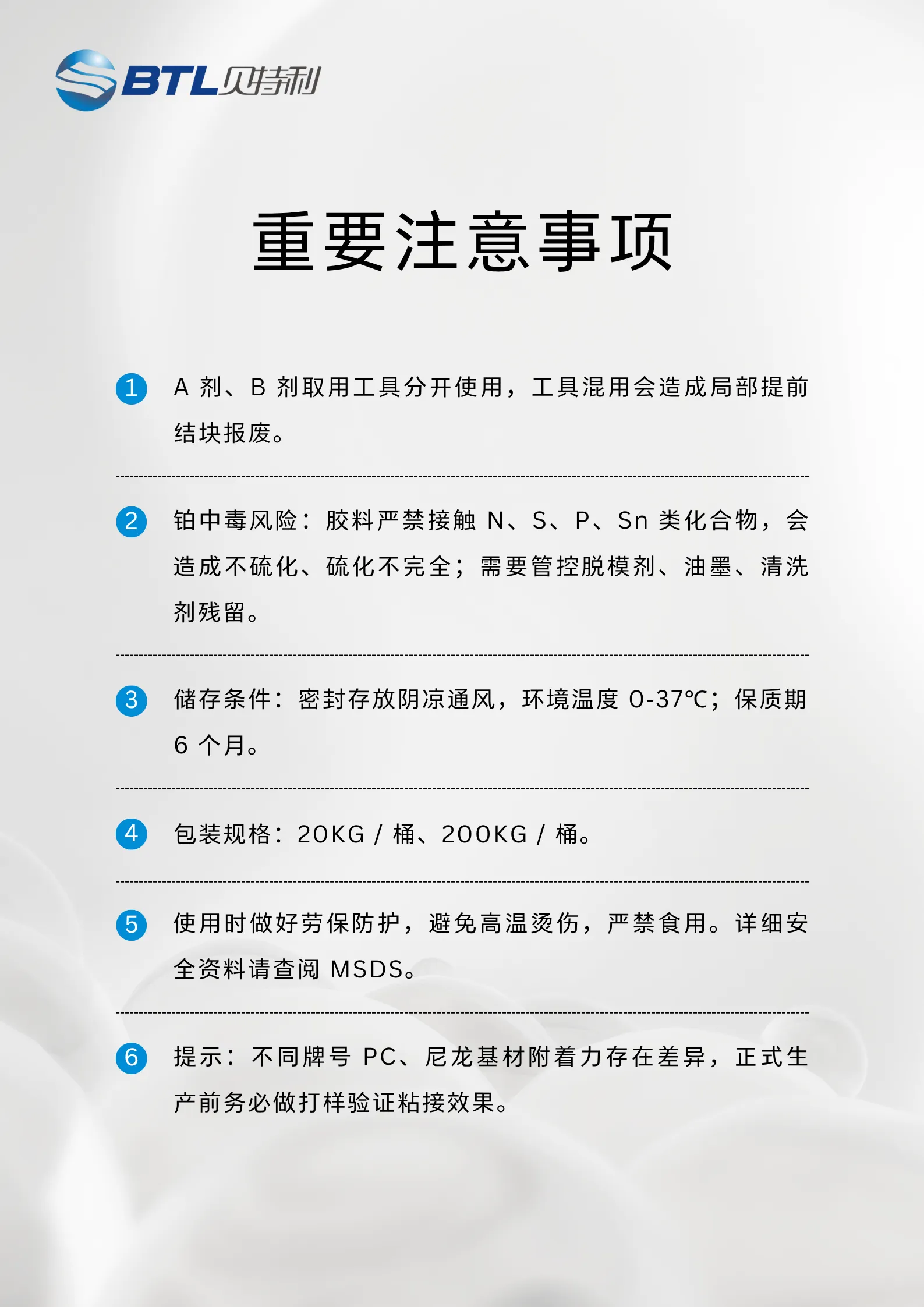
Use separate tools and containers for Parts A and B. Cross-contamination may cause premature localized curing, resulting in material loss.
Risk of Platinum Catalyst Poisoning:
The compound must not come into contact with substances containing N, S, P, or Sn, as these may cause curing inhibition or incomplete curing. Residues from mold release agents, inks, cleaning agents, and other processing chemicals must therefore be carefully controlled.
Storage Conditions:
Store in sealed containers in a cool, well-ventilated environment at 0-37°C. Shelf life is 6 months.
Packaging:
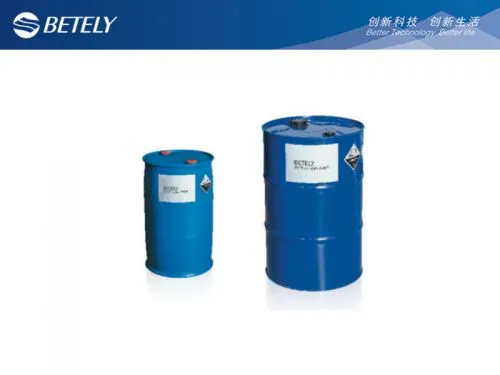
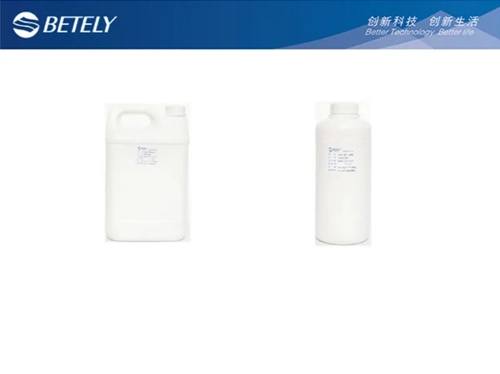
Available in 20 kg/pail and 200 kg/pail packaging.
Appropriate personal protective equipment should be used during processing. Avoid burns caused by high-temperature equipment or molds. The product is not intended for ingestion. For detailed safety information, please refer to the MSDS.
Note:
Bonding performance may vary among different grades of PC and nylon substrates. Adhesion testing and sample validation are strongly recommended before mass production.