| Items | Value |
| Printing Viscosity (rotational viscometer mPa, 25℃) mPa | 10000-40000 |
| Force drying (180-220℃), Min | 20-60 |
Testing parameters
| Testing item | Testing condition and method | Result |
| Adhesion | The case method, Rubber 3M610#3 times | 4-5B |
| Theory solid content | 150℃/1.5h | 45%-55% |
| Resistance after potting | By multimeter and dedicated board, 200g positive pressure, thickness about 10-15 | <100Ω (S=4.0mm2) |
| Conductivity change | Conductive dry ink, 500g positive pressure, scratched by fingernail 3 to 5 times | <200Ω |
| Hot and humid | 80℃/98%RH | No abnormality in 48h |
Vulcanize the material twice before use (150℃/1-2 hours), and the surface needs to be clean.
Take out the sealed ink, add 1.0% catalyst CAT-SPL-11 after opening the lid, and mix it evenly. If the viscosity is too high, add odorless kerosene to adjust to the proper viscosity for screen printing, pad printing or dot printing.

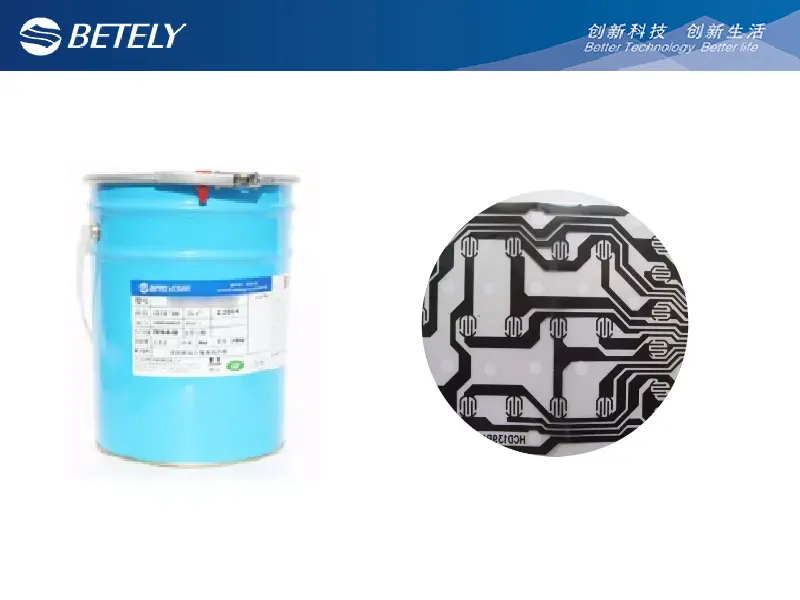
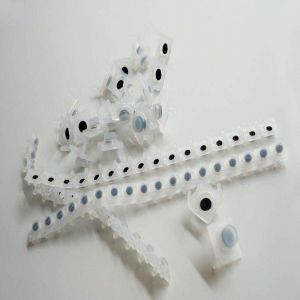
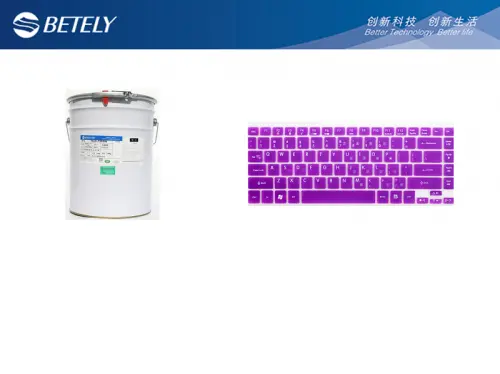
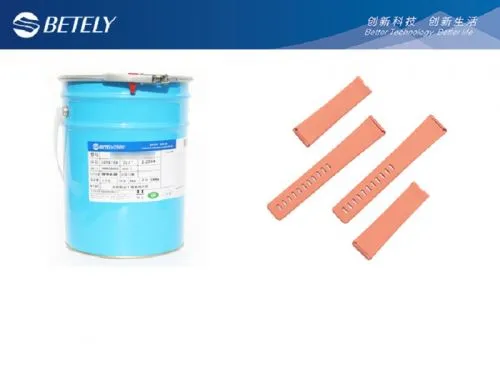
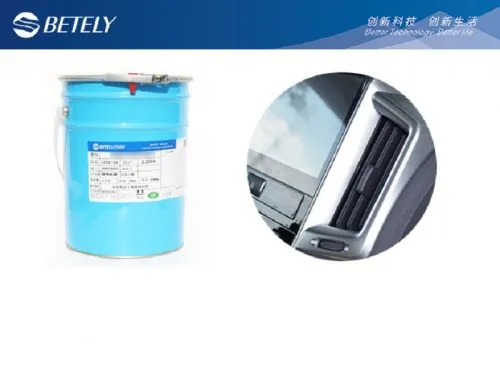
Silicone rubber buttons/plastic parts for electronic products such as fax machines, photocopiers, and electric remote controls
After opening the can, the product should be fully stirred evenly; the dot printing must maintain a good construction environment. It is recommended that the operating workshop adopts dust-free treatment, the temperature should be controlled below 35℃, and the humidity should be controlled at 55-75%; the humidity is too low or too high. Affect the uniformity of the appearance of the product table after dot printing.
It is better for the printed products to undergo secondary vulcanization greater than 150°C/1-2 hours before use, otherwise, it will cause poor local vulcanization of the paint film; please refrigerate the ink, and the unused ink should be sealed and refrigerated.
Storage conditions: sealed and stored in a cool, dry, and ventilated place (storage temperature -5~37℃, humidity 55~85%), waterproof, leakproof, sunscreen, high temperature, away from fire.
![]()