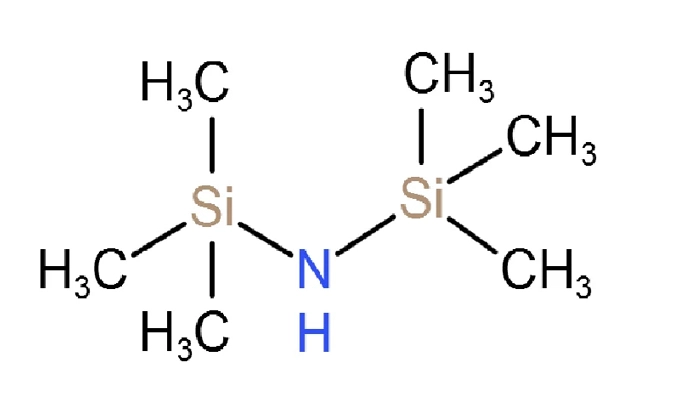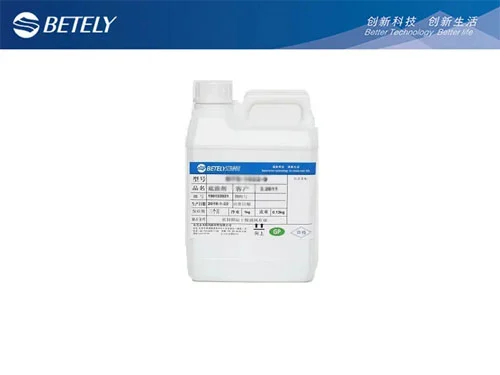
1. Appearance: Colorless transparent liquid
2. Purity (%): ≥99.0
3. Purity (%): ≤0.50
4. Density (g/cm3,25℃): 0.771-0.777
5. Refractive index (n20/D): 1.406-1.410
Excellent surface activity: HMDS CAS NO. 999-97-3 can be used as a surface treatment agent to form an organic silicon protective film on various materials, giving them moisture-proof, anti-fouling, and anti-corrosion properties.
Increased hydrophobicity: As a surface treatment agent, Hexamethyldisilazane (CAS 999-97-3) improves surface hydrophobicity, which is beneficial in applications such as electronics, where water and moisture can damage sensitive components.
Better mold release: As a mold release agent, its excellent surface properties prevent sticking and improve ease of release.
Cost-effective: Hexamethyldisilazane (CAS 999-97-3) can be used in low concentrations and is easily synthesized, making it suitable for a wide range of industrial applications. As one of the leading hexamethyldisilazane suppliers, Betely provides you with a reasonable hexamethyldisilazane price list.
Production of rubber and pharmaceutical intermediates
Hexamethyldisilazane (CAS 999-97-3) is commonly used in the synthesis of specialty rubber materials and pharmaceutical compounds. Its strong silylation capability helps protect reactive functional groups and improves reaction efficiency, making it valuable in modern chemical production.
Surface treatment of inorganic powders and fillers
HMDS is widely applied for the surface modification of diatomaceous earth, white carbon black (silica), and titanium powder. Treatment with hexamethyldisilazane (CAS 999-97-3) enhances hydrophobicity, dispersion, and compatibility with organic matrices, significantly improving the performance of coatings, sealants, and composite materials.
Adhesion promoter for photoresists in the semiconductor industry
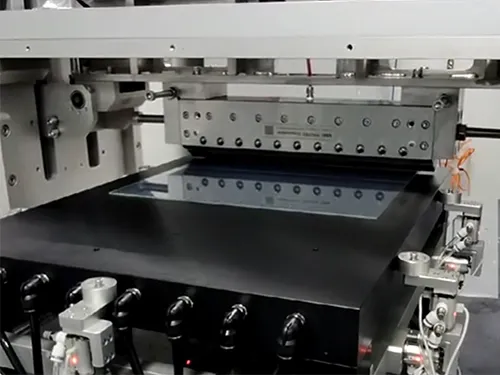
One of the most critical high-tech uses of hexamethyldisilazane (CAS 999-97-3) is as a photoresist bonding agent in semiconductor photolithography. HMDS improves adhesion between silicon wafers and photoresist layers, ensuring precise pattern transfer and high manufacturing yield.
Proper storage is essential to maintain product stability and safety. Hexamethyldisilazane (CAS 999-97-3) should be:
Stored in a dry, inert gas atmosphere to prevent moisture reaction
Kept in tightly sealed containers to preserve purity and reduce evaporation
Placed in a cool, dry, and well-ventilated environment
Stored separately from oxidizing agents and acids to avoid hazardous reactions