What Is Mono-Functional Silicone Oil?
Mono-functional silicone oil is a type of reactive surface modifier.
Its molecular structure consists of:
One end: a silicone chain that provides low surface energy.
The other end: a reactive functional group, such as hydroxyl, acrylate, methoxy, amino, or Si-H groups.
Working Principle
The reactive functional group chemically reacts with the resin or substrate to form strong covalent bonds, permanently anchoring the silicone chain to the material surface.
This modification can impart excellent properties such as:
Smooth and silky surface feel
Scratch resistance
Anti-graffiti performance
Wear and stain resistance
Water resistance
Heat resistance
Easy cleaning
Low migration
Improved leveling and spreading
Because the silicone chain is chemically bonded to the material, the resulting surface properties are durable and resistant to repeated wiping, with minimal risk of migration or exudation.
Betely Mono-Functional Silicone Oil Product Series
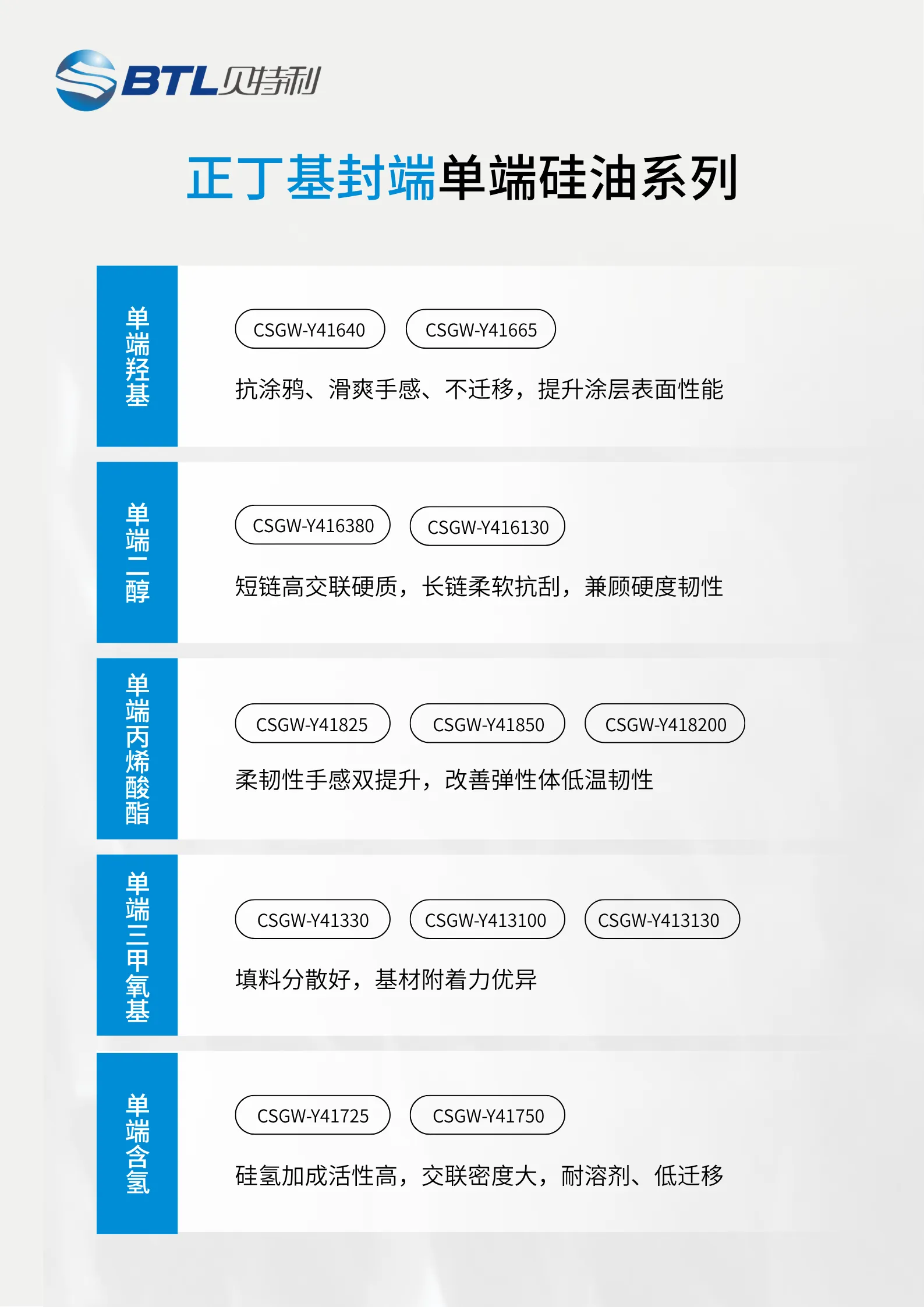
N-Butyl-Terminated Mono-Functional Silicone Oil Series
| Type | Representative Grades | Key Features |
| Mono-Hydroxyl | CSGW-Y41640 / CSGW-Y41665 | Anti-graffiti performance, smooth hand feel, low migration, improved coating surface properties |
| Mono-Diol | CSGW-Y416130 / CSGW-Y416380 | Short-chain grades provide higher crosslinking and hardness, while long-chain grades offer softness and scratch resistance, balancing hardness and toughness |
| Mono-Acrylate | CSGW-Y41825 / CSGW-Y41850 / CSGW-Y418200 | Improves both flexibility and surface feel while enhancing the low-temperature toughness of elastomers |
| Mono-Trimethoxy | CSGW-Y41330 / CSGW-Y413100 / CSGW-Y413130 | Excellent filler dispersion and strong adhesion to substrates |
| Mono-Hydrogen | CSGW-Y41725 / CSGW-Y41750 | High hydrosilylation reactivity, increased crosslink density, good solvent resistance, and low migration |
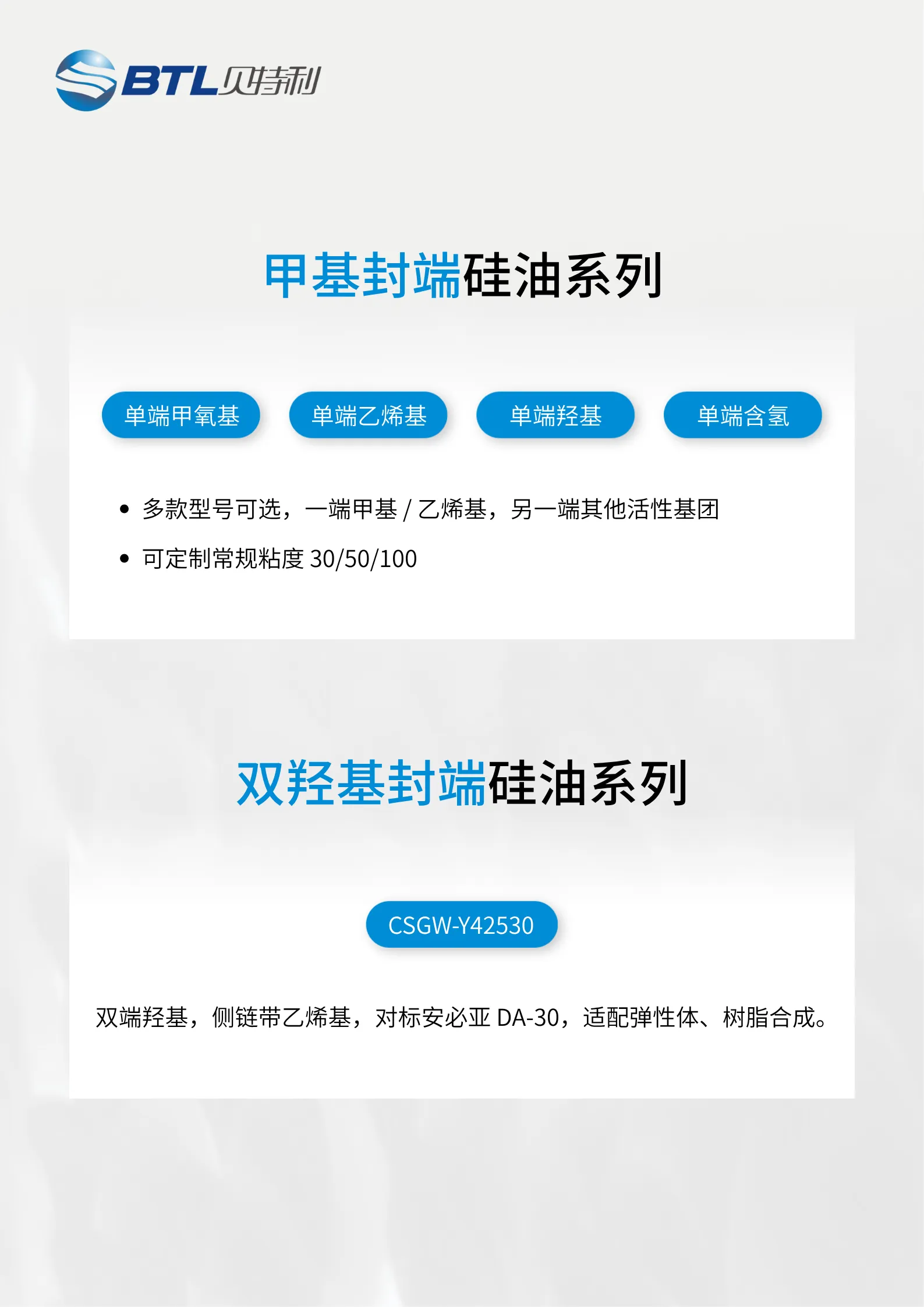
Methyl-Terminated Silicone Oil Series
A range of mono-methoxy, mono-vinyl, mono-hydroxyl, and mono-hydrogen grades is available.
Customization Available: One end can be methyl- or vinyl-terminated, while the other end can be customized with different reactive functional groups. Standard viscosities such as 30, 50, and 100 can also be customized according to application requirements.
Dihydroxyl-Terminated Silicone Oil Series
CSGW-Y42530: Dihydroxyl-terminated silicone oil with vinyl groups on the side chain. It is designed as an alternative to Ambia DA-30 and is suitable for elastomer modification and resin synthesis.
Reaction Mechanisms of Different Functional Groups
Methacryloyl / Acrylate Type
Under UV irradiation, the C=C double bonds undergo free-radical polymerization, enabling the siloxane chains to become covalently incorporated into the UV-curable resin network.
Trimethoxy Type
The trimethoxy groups hydrolyze to form silanol groups, which subsequently undergo condensation reactions with hydroxyl groups on inorganic substrates, forming strong Si-O-M covalent bonds for durable and irreversible interfacial bonding.
Hydroxyl-Modified Type
Terminal -OH groups react with -NCO groups in curing agents to form urethane bonds. The siloxane chains are incorporated into the polyurethane network and can enrich at the material surface to form a functional surface layer.
Hydrogen-Containing Silicone Oil
Si-H groups undergo hydrosilylation reactions with double bonds to form a crosslinked network. Through subsequent reactions, the material can form a dense and durable hydrophobic protective layer.
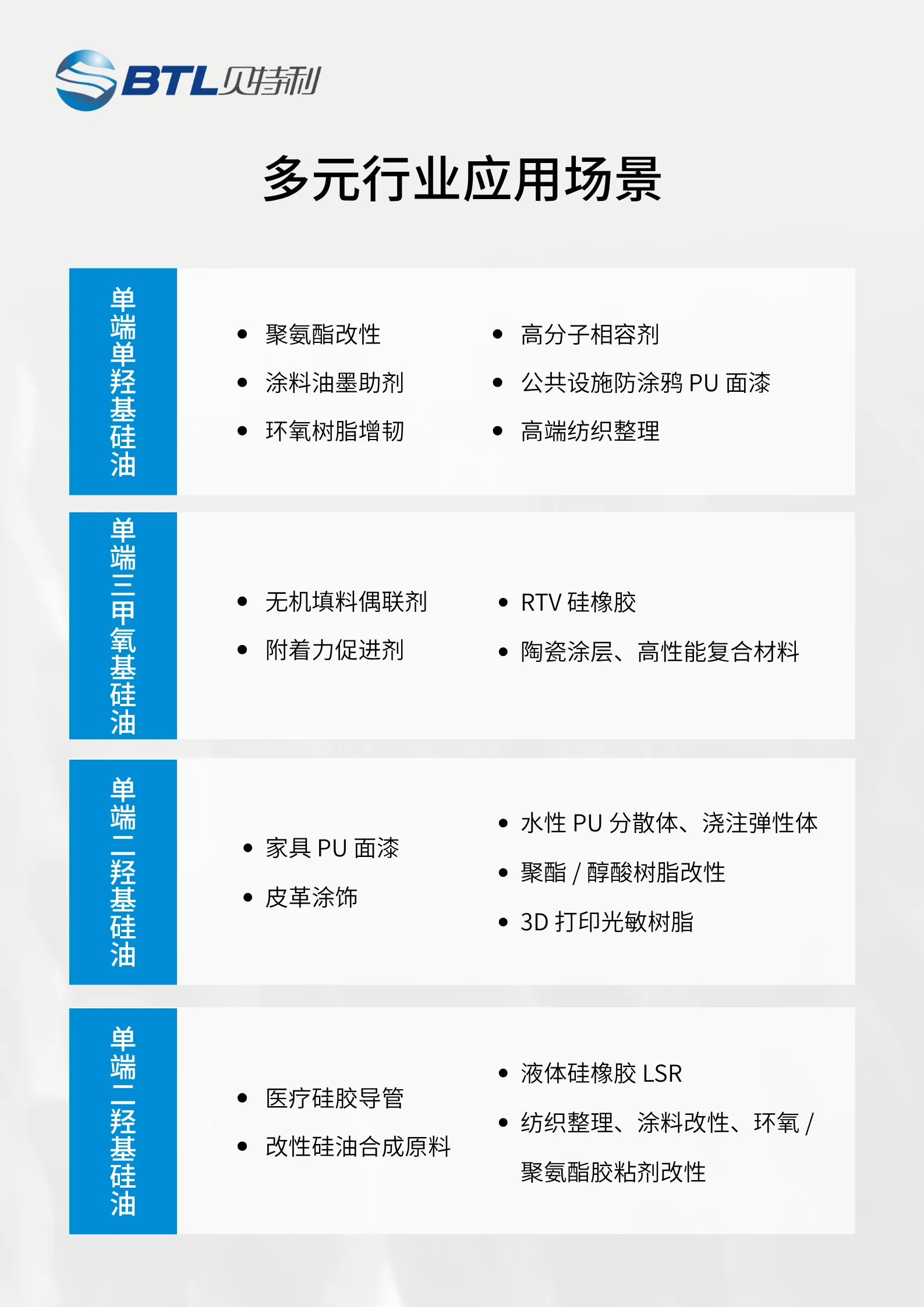
Applications Across Multiple Industries
Mono-Hydroxyl Silicone Oil
Polyurethane modification: Used in silicone-modified PU elastomers and synthetic leather to improve smoothness, hydrolysis resistance, and wear resistance.
Coating and ink additives: Improves leveling and helps reduce cratering and orange peel while providing hydrophobicity, stain resistance, anti-graffiti properties, and easier cleaning.
Epoxy resin toughening: Improves crack resistance, mold release, and chemical corrosion resistance.
Polymer compatibilizer: Improves filler dispersion, reduces friction, and enhances processing flow.
Anti-graffiti PU topcoats for public facilities: Can reduce maintenance costs by up to 70%, with a service life of approximately 8-10 years under suitable application conditions.
High-end textile finishing: Provides a soft, fluffy hand feel together with wash resistance and antistatic properties.
Mono-Trimethoxy Silicone Oil
Coupling agent for inorganic fillers: Suitable for surface modification of calcium carbonate and talc, improving dispersion and compatibility, reducing system viscosity, and allowing higher filler loading.
Adhesion promoter: Improves coating adhesion to glass and metal substrates and helps reduce coating peeling or delamination.
RTV silicone rubber: Improves sealant adhesion to metal and glass while enhancing heat and aging resistance.
Ceramic coatings and high-performance composites: Strengthens interfacial bonding and improves mechanical properties and weather resistance.
Mono-Diol Silicone Oil
Waterborne PU dispersions and cast elastomers: Improves resilience, abrasion resistance, and low-temperature crack resistance, and can be used in high-performance sealant systems.
Furniture PU topcoats: Helps create a skin-like soft-touch surface and can increase product added value by approximately 15%.
Leather finishing: Forms a glossy, smooth protective layer with good flex resistance and a refined, non-tacky hand feel.
Polyester and alkyd resin modification: Improves outdoor weatherability, yellowing resistance, and corrosion resistance.
3D printing photosensitive resins: Helps reduce brittleness while improving flexibility and interlayer adhesion.
Mono-Hydrogen Silicone Oil
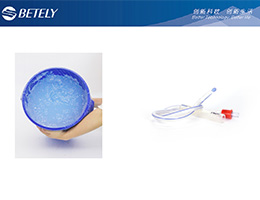
Medical silicone tubing: Helps form a durable lubricating layer on the inner wall of the tubing with reduced silicone oil migration, improving insertion smoothness and helping protect mucosal tissue.
Raw material for modified silicone oil synthesis: Used in hydrosilylation reactions to produce polyether-modified and alkyl-modified silicone oils for defoamers, leveling agents, and lubricants.
Liquid Silicone Rubber (LSR): Helps regulate crosslink density to produce low-hardness, highly elastic products suitable for flexible buttons, medical components, and related applications.
Textile finishing, coating modification, and epoxy/polyurethane adhesive modification.
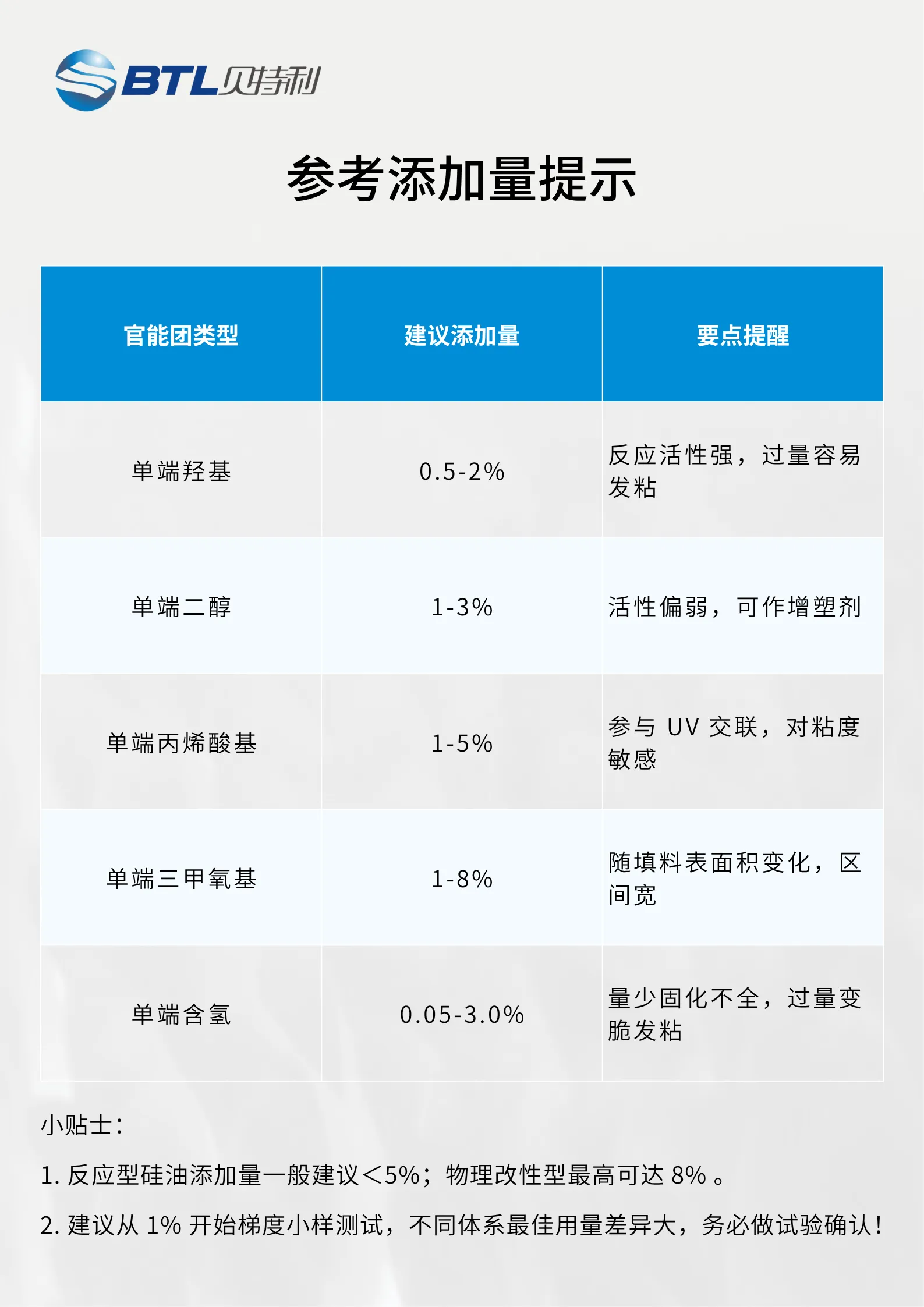
Recommended Addition Levels
| Functional Group Type | Recommended Addition Level | Key Considerations |
| Mono-Hydroxyl | 0.5-2% | High reactivity; excessive addition may cause surface tackiness |
| Mono-Diol | 1-3% | Lower reactivity and may also function as a plasticizing modifier |
| Mono-Acrylate | 1-5% | Participates in UV crosslinking and is sensitive to system viscosity |
| Mono-Trimethoxy | 1-8% | Recommended dosage varies significantly depending on filler surface area |
| Mono-Hydrogen | 0.05-3.0% | Insufficient dosage may result in incomplete curing, while excessive dosage may cause brittleness or tackiness |
Application Tip:
For reactive silicone oils, the recommended addition level is generally below 5%, while physically modifying silicone oils may be used at levels of up to approximately 8%.
It is recommended to begin with a 1% dosage and conduct gradient formulation tests. The optimum addition level can vary significantly between different resin and formulation systems, so laboratory validation is essential before mass production.
Why Choose Betely?
Strong Technical Capabilities
Betely has established expertise in molecular weight distribution control and supports stable mass production of mono-functional silicone oils through both butyllithium and non-butyllithium synthesis routes.
With four R&D centers located in Suzhou, Wuxi, Dongguan, and Jiujiang, Betely is equipped with more than 300 high-precision testing and analytical instruments to support formulation development, performance verification, and quality control.
Flexible Customization
Betely supports customized silicone oil structures, molecular weights, and viscosities according to specific application requirements.
The development-to-small-batch-production cycle can be completed in as little as 45 days, while customized samples can be provided in as little as 7 days.
Proven Customer Applications
Betely's products are used across industries including:
Betely has provided products and technical support to well-known companies including BYD, Huawei, Xiaomi, Yuwell Medical, and Huitian New Materials.

Comprehensive Service System
Requirement analysis: Evaluate the required molecular structure, formulation system, and end-use application.
Customized solution development: Design the formulation, prepare samples, and conduct performance testing.
Scale-up production: Begin mass production after successful validation, supported by full-process quality control.
Ongoing technical support: Continuously track application performance and optimize products according to customer requirements.
Betely also provides comprehensive technical support covering product selection, application guidance, formulation assistance, and troubleshooting, enabling rapid response to customer requirements.
Betely has obtained multiple management system certifications, including IATF 16949, ISO 13485, ISO 14001, and ISO 45001, and has been recognized as a specialized and innovative "Little Giant" enterprise, supporting consistent product quality and reliable supply.